
How a hub dyno works
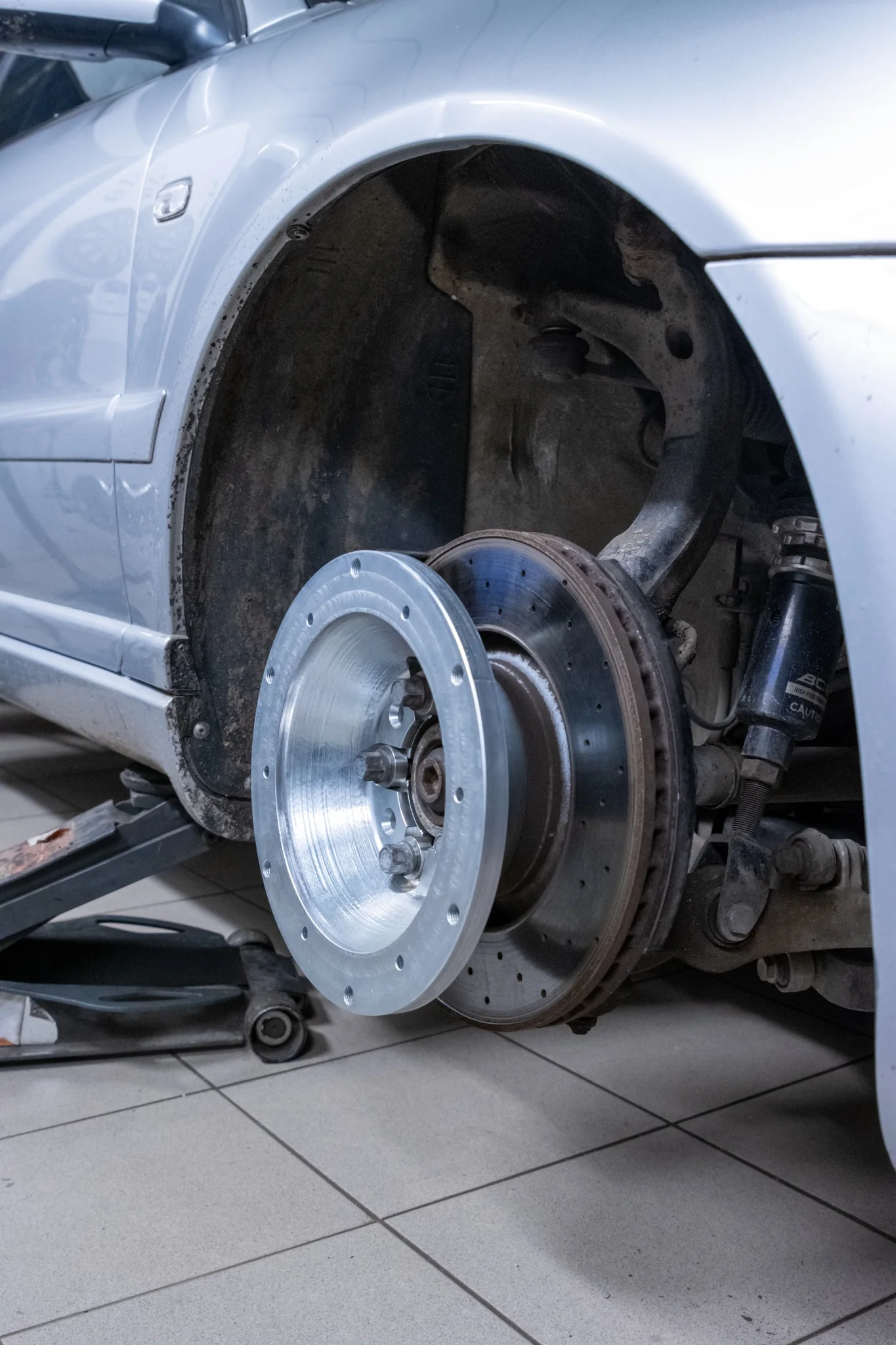
Unlike a conventional roller dynamometer, a hub dyno connects directly to the vehicle wheel hubs. The wheels are removed and the vehicle is connected to the dyno through machined adapters, creating a direct mechanical connection between the drivetrain and the dynamometer.
For high-power calibration work, this removes several variables that exist with roller systems.
- No tyre slip
- No tyre heating during the run
- No tyre-pressure variation
- No roller-contact variation
- No vehicle movement on rollers
- No AWD wheelbase adjustment
Two braking-capacity levels
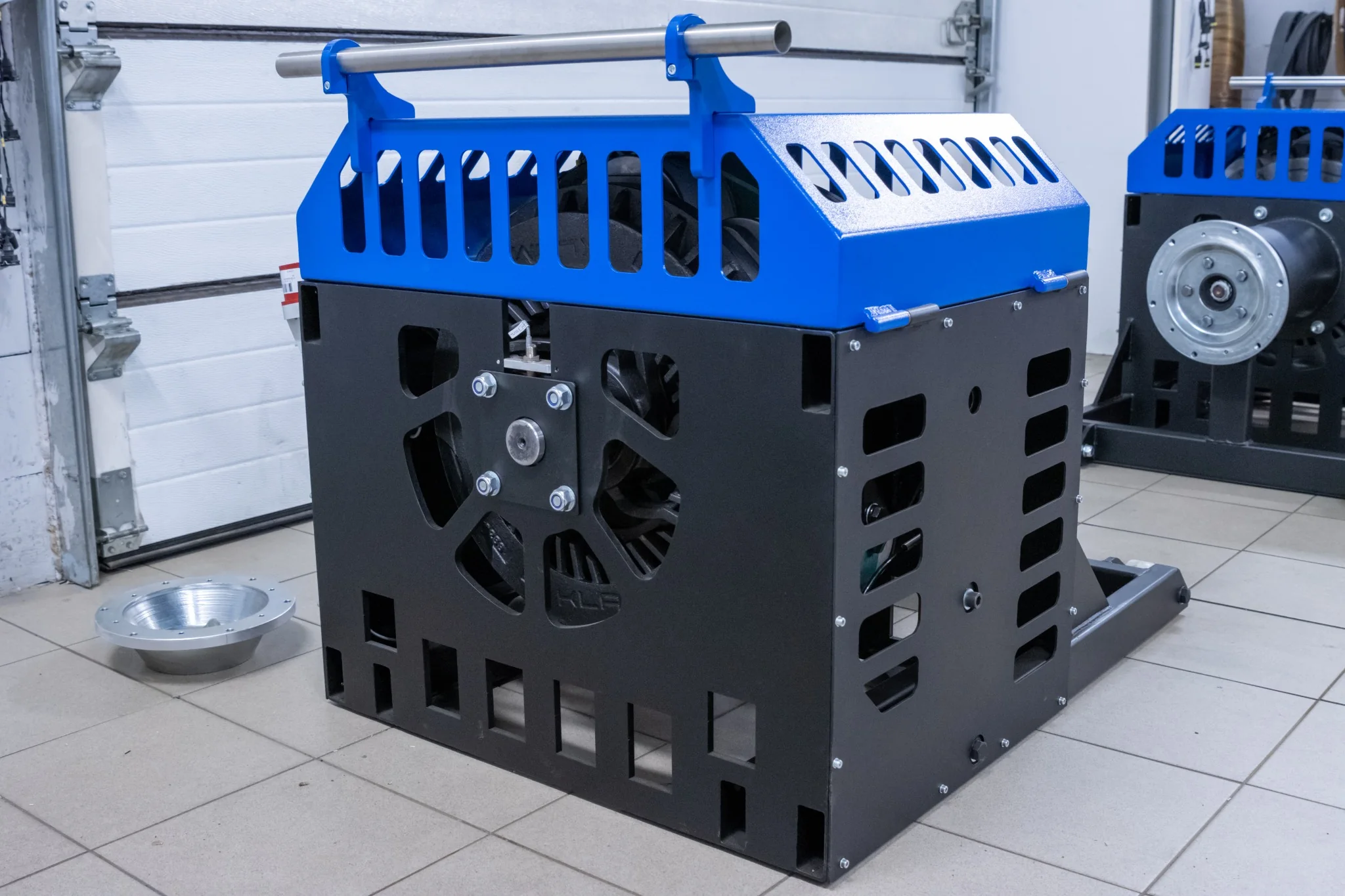
Choose the retarder package according to the work your shop actually does. The 5200 Nm system is rated for 1000+ HP per axle and the 9200 Nm system for 2000+ HP per axle. Both use the same Kamuto Productions hub platform and Sportdevices SP6 control.
KLAM CFK-330
Two CFK-330 electromagnetic retarders rated at 2600 Nm each. This system is capable of controlled ramp runs on 1000+ HP vehicles and is the right choice for many performance workshops.
- 2 × CFK-330 per axle
- 2600 Nm per retarder
- 5200 Nm combined torque
- 1000+ HP ramp-run capability
KLAM CFK-550
Two CFK-550 retarders per axle provide substantially greater braking and thermal reserve for workshops that regularly tune very high-powered vehicles.
- 2 × CFK-550 per axle
- Approximately 9200 Nm combined torque
- 2000+ HP capability
- Greater braking reserve
- Greater thermal reserve for repeated testing
Why thermal capacity matters
Maximum braking torque is only part of dyno capability. Electromagnetic retarders lose braking capacity as operating temperature rises, so a dyno that controls one high-power run may behave differently after repeated testing.
For professional tuning work, the ability to maintain a controlled ramp rate as the dyno heats up is important. Our CFK-550 system was selected not only for peak braking torque, but also for the additional thermal reserve it provides during repeated high-power use.
In our own workshop, vehicles around 1000 WHP can be tested repeatedly under normal ramp-run conditions without requiring cooldown after every run.
Single axle or AWD
The same core platform is used across the range, so you can choose exactly how much braking capacity you want on each axle.
Single Axle
For FWD or RWD testing. Every single-axle machine uses Sportdevices SP6 and comes with an AWD-ready cabinet pre-wired for the second axle.
- 2 hub dyno units
- 2 KLAM retarders
- Universal 4-bolt and 5-bolt adapters
- Sportdevices SP6
- AWD-ready control cabinet
- Configured dyno PC
AWD
Complete four-hub systems are available in three standard combinations so you can match braking capacity to the type of vehicles you normally tune.
- 5200 / 5200 Nm — 2000+ HP AWD
- 9200 / 5200 Nm — 3000+ HP AWD
- 9200 / 9200 Nm — 4000+ HP AWD
- 4 hub dyno units
- Sportdevices SP6
- Complete control and power system
AWD-ready control cabinet as standard
Every Kamuto Productions single-axle hub dyno is supplied with a control cabinet that is already wired for the second axle.
When your workshop needs AWD capability, you do not have to replace the cabinet or controller. Install the two additional retarder power supply units in the existing cabinet, connect two additional hub dyno units to the prepared wiring and configure the system for AWD operation.
This lets you start with the capacity you need today and expand the same system later without throwing away your original control-system investment.
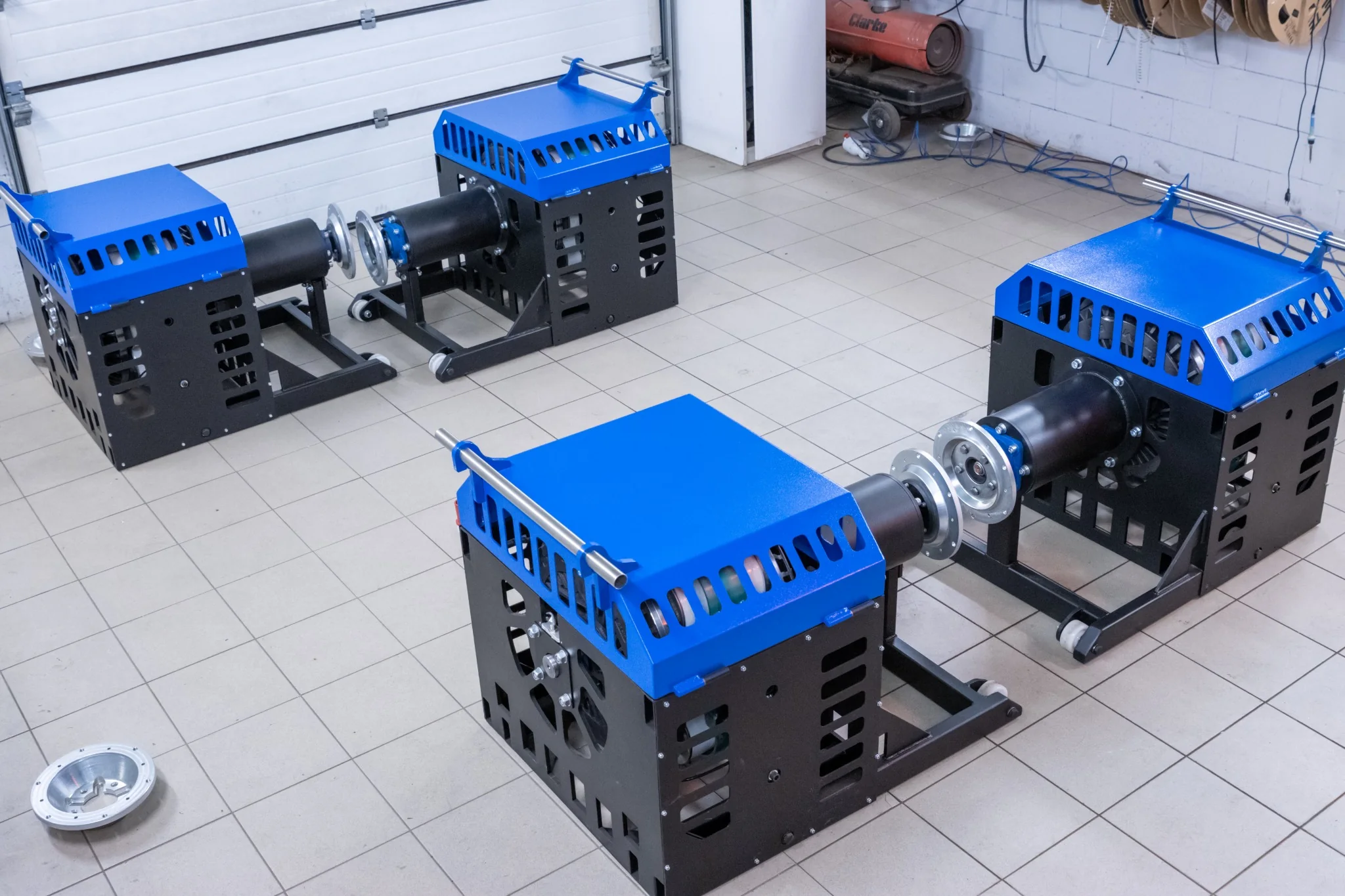
Four hubs. Direct connection. No roller compromise.
The complete system connects directly to all four vehicle hubs, giving the tuner a stable mechanical connection without tyre slip or wheelbase adjustment.
Hub adapter system
Every dyno includes universal 4-bolt and 5-bolt adapters covering common bolt patterns from 90 mm to 135 mm. Dedicated patterns can also be manufactured when required.
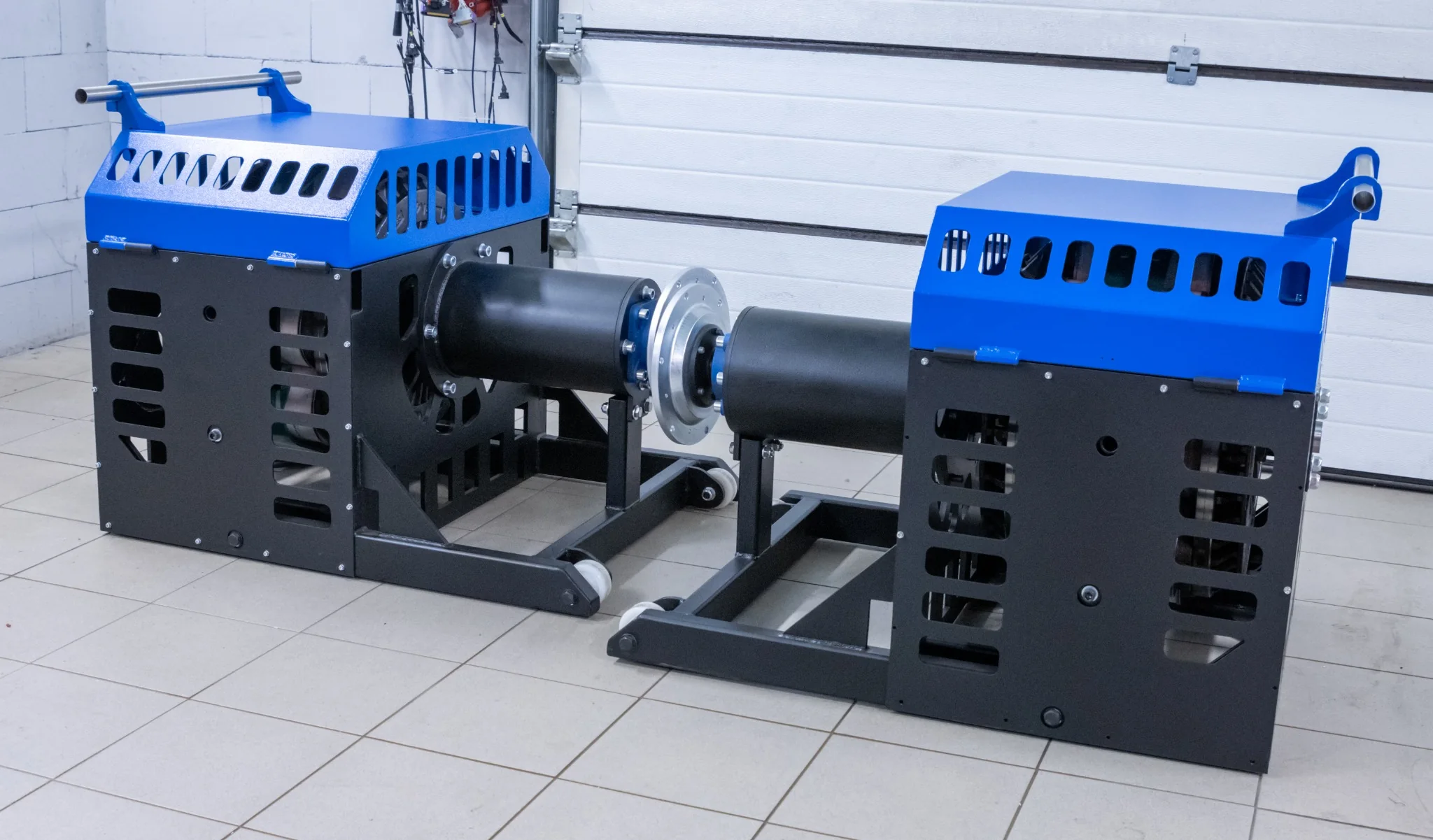
| 4-bolt coverage | 4x90 to 4x135 mm |
|---|---|
| 5-bolt coverage | 5x90 to 5x135 mm |
| Material | 42CrMo / 4140 alloy steel |
| Adapter outside diameter | 285 mm |
| Dyno nose diameter | 220 mm |
| Wheel hardware | M12 and M14 supported |
From steel to finished adapter
Critical hub-interface parts are machined from substantial alloy-steel blanks and checked through the manufacturing process.
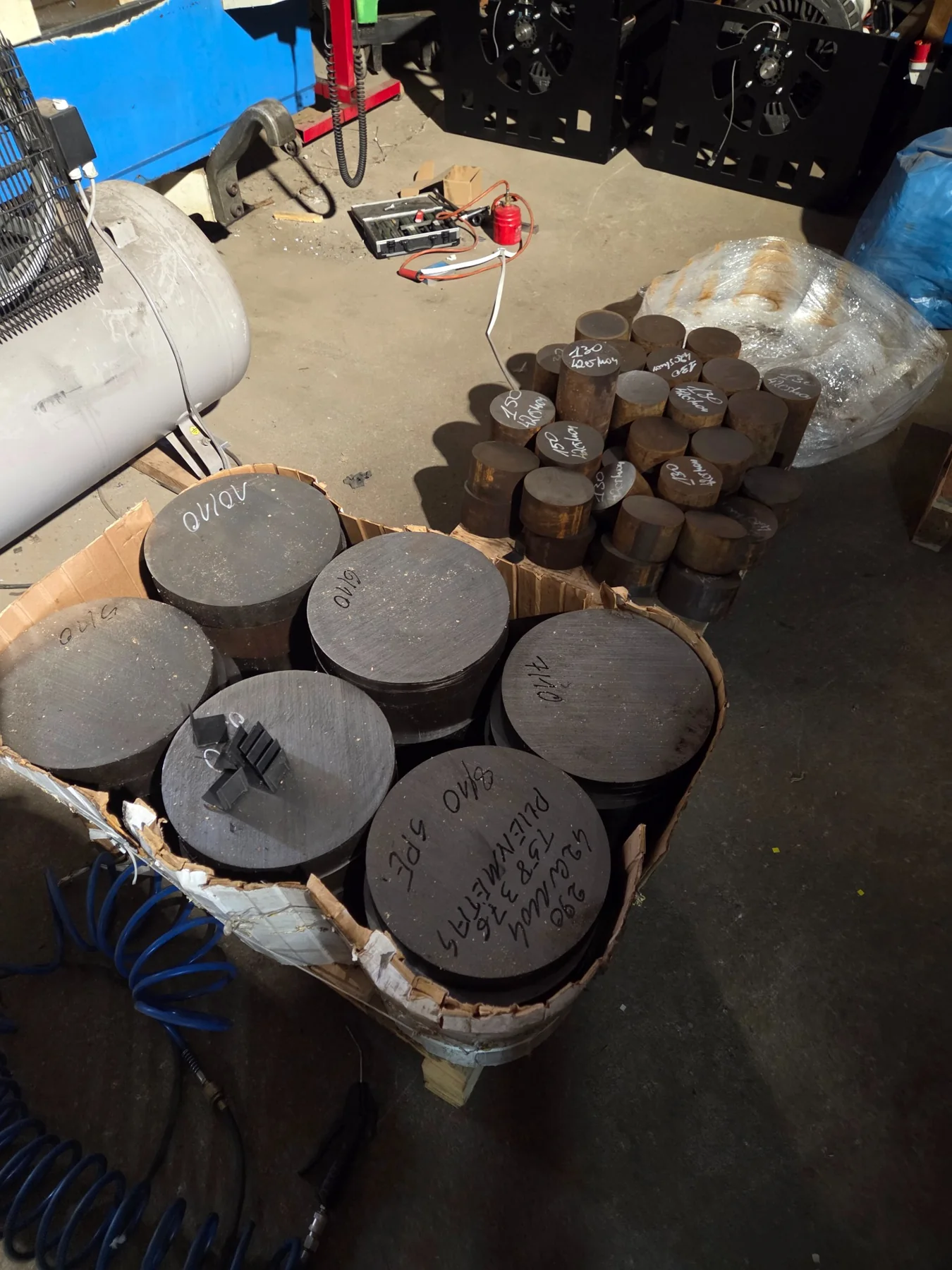
Raw material
Heavy steel stock selected for the mechanical connection between vehicle and dynamometer.
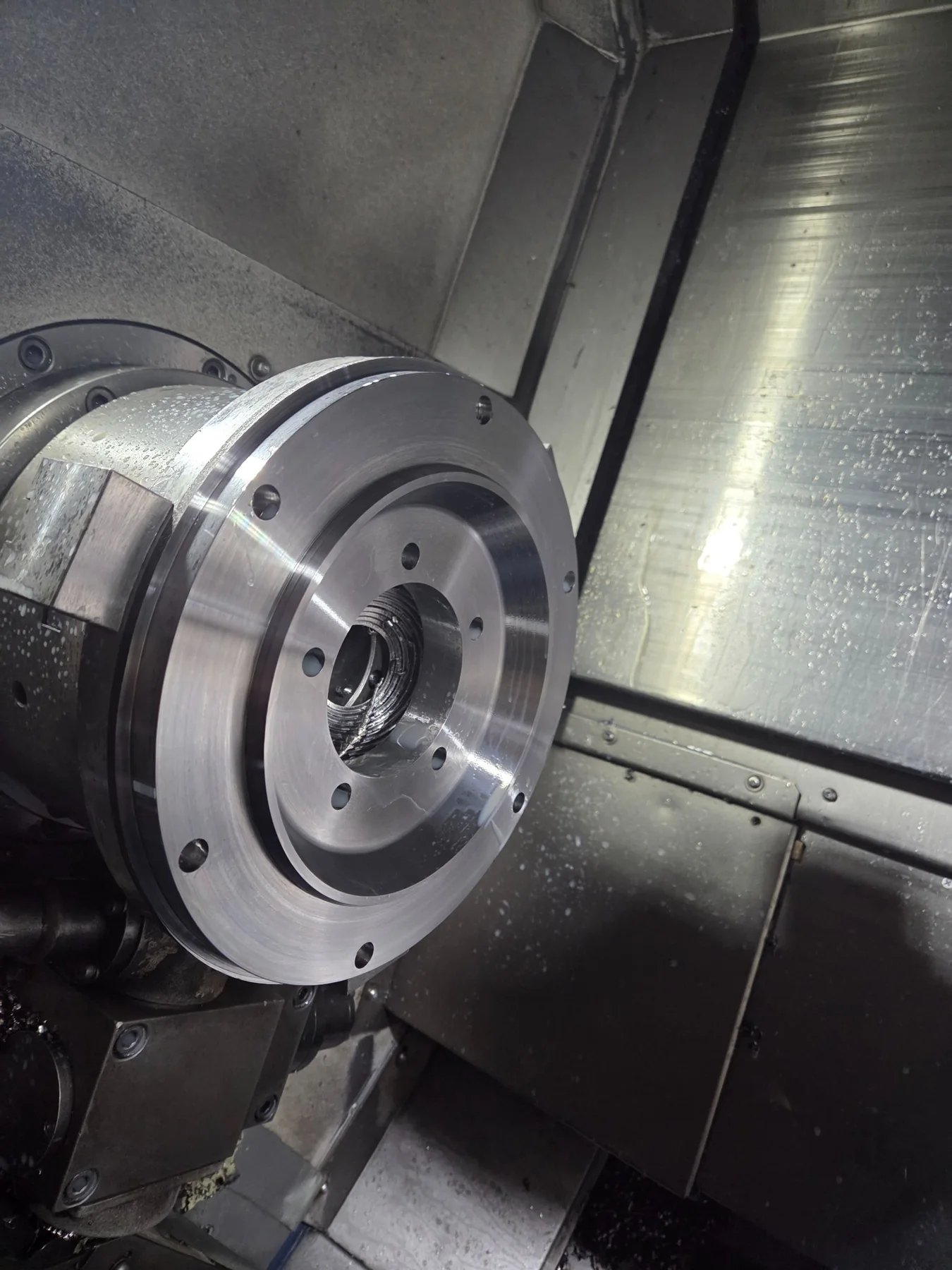
CNC machining
Adapter geometry, mounting faces and interfaces are machined for accurate concentric connection.
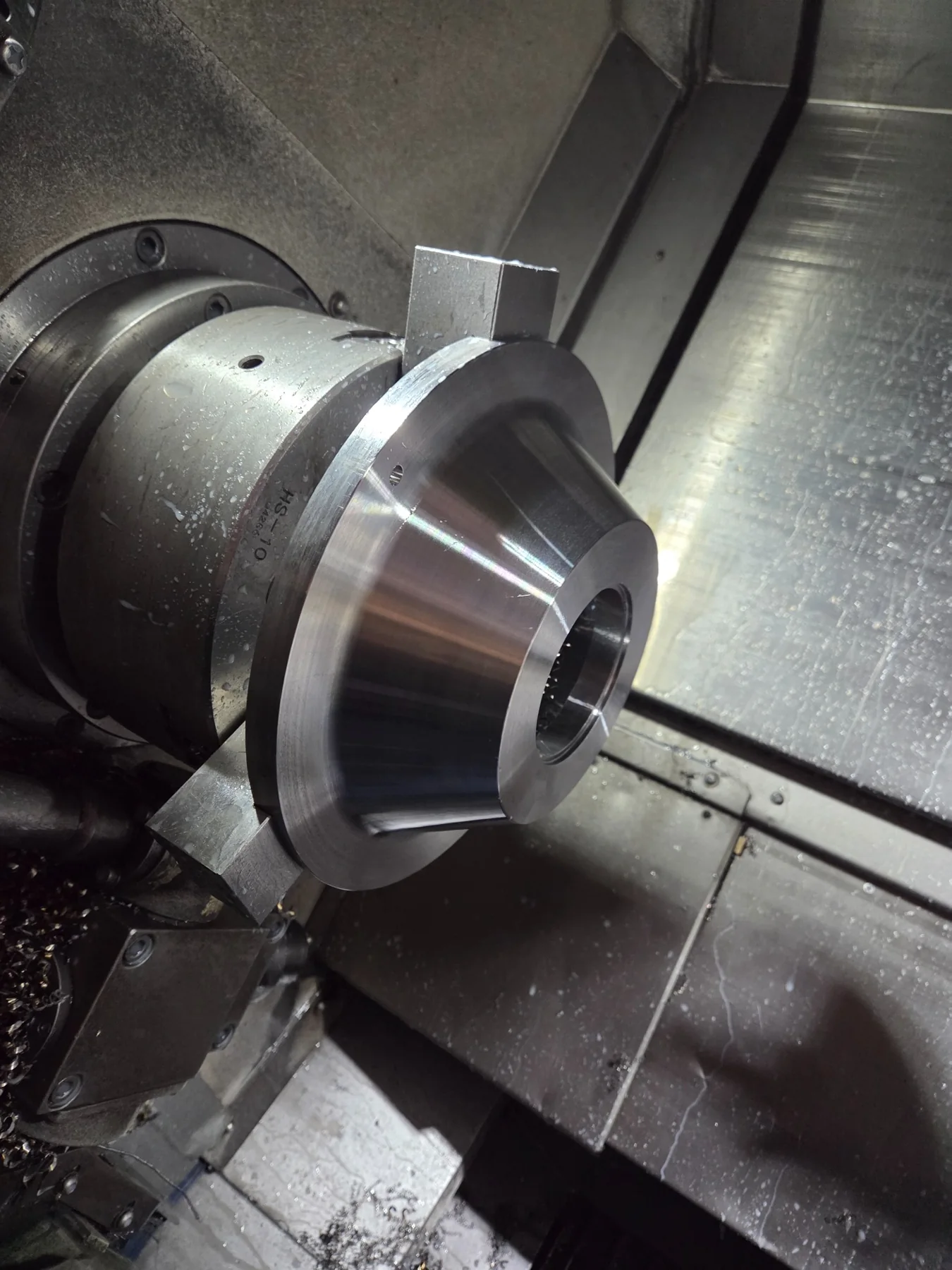
Finished hardware
The finished adapter becomes the direct mechanical link from the vehicle hub to the dyno.
Sportdevices SP6 control on every model
All current Kamuto Productions hub dynos use the Sportdevices SP6 control system. We use the same controller architecture on single-axle and AWD machines, which simplifies system expansion and avoids replacing the controller if you upgrade later.
Assembled, calibrated and tested before shipment
Every complete system is assembled and function-tested at Kamuto Productions in Klaipėda, Lithuania. The dyno PC is configured with the required software and the measurement system is calibrated before the machine leaves our workshop.
The goal is simple: you receive a complete working system, not a collection of components that still needs engineering before you can start tuning.
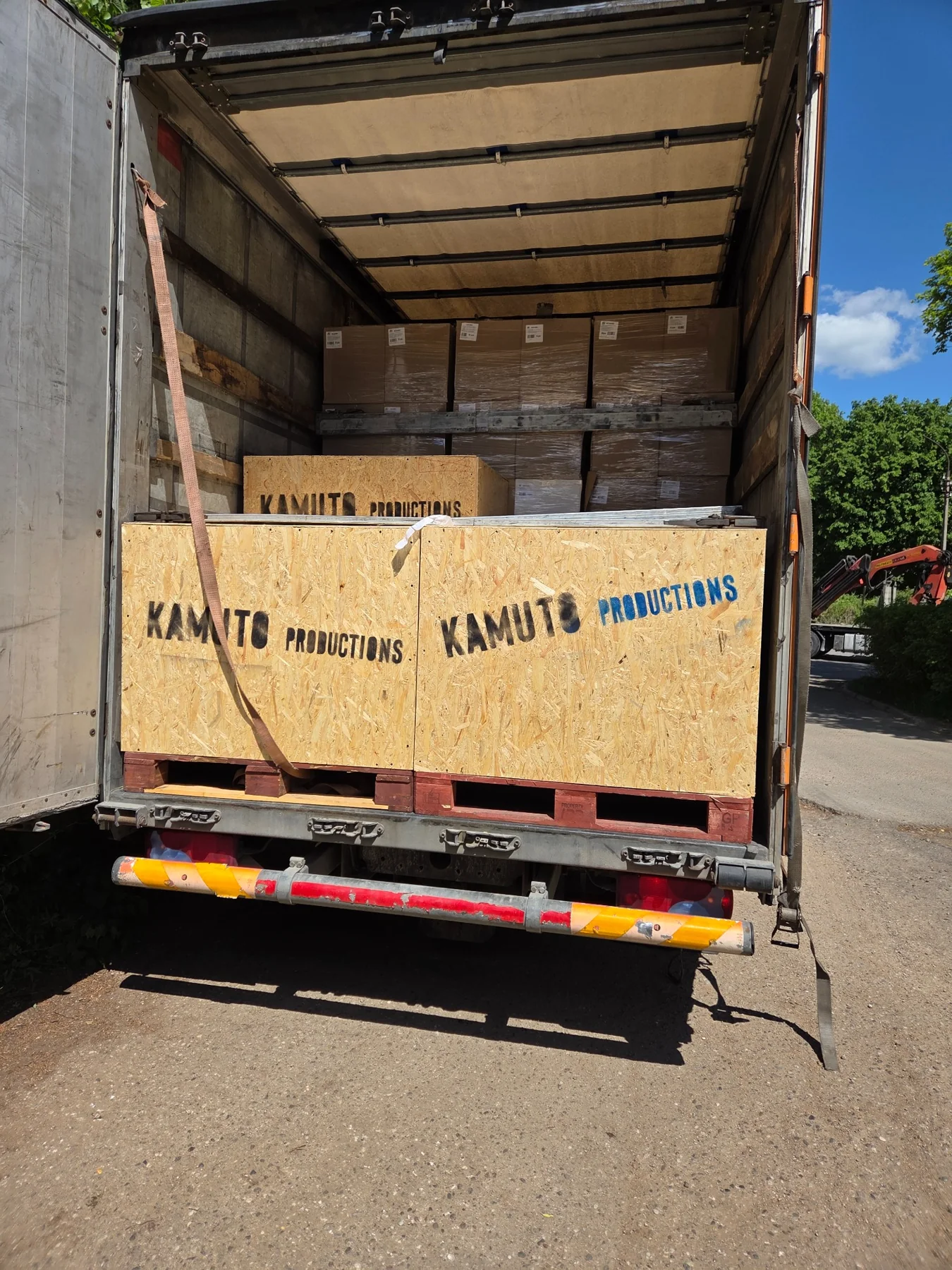
Built here. Shipped to your workshop.
Complete systems can be prepared for international freight. A typical AWD shipment is approximately four pallets and around 2600 kg total shipping weight, although final dimensions and weight depend on the selected configuration.
Dyno units, adapters, controls and supporting hardware are packed as a complete system for transport.
Need a hub dyno for your workshop?
Tell us your normal vehicle types, expected power levels and whether you need single-axle or AWD testing. We will recommend the configuration that makes sense for your workload.
Request a Quote